






The name Kirikiri, meaning “gravelly soil”, is the traditional name for the upper part of Hayes Stream in Papakura. It was also known as Waipōkapū and flowed into Otūwairoa (Slippery Creek).
The name also came to apply to the larger area around the stream including Pukekiwiriki pā and Te Aparangi papakāinga. The area was of great importance to Ngāti Tamaoho, including many places used since the times of the earliest peoples to Aotearoa. The area had several large settlements and included substantial agricultural land as well as wāhi tapu.
The land was eventually taken from Ngāti Tamaoho by way of raupatu under the New Zealand Settlements Act 1864. This legislation allowed the crown to confiscate land from iwi and hapū deemed to be “in rebellion”. Ngāti Tamaoho lost large parts of their traditional lands through this process including the 2,730 acre Kirikiri block.
Whānau logo - Ko
Ko is a digging tool used for gardening. It is used to plant seeds that grow food and plants that sustain the hapu/community. It symbolises two meanings; the plentiful land and soil of the rohe and feeding the mind with knowledge that grows inside our rangitahi. This replants these names back into our community. The ko is surrounded by a wakahuia (treasure box).

Otuuwairoa (Slippery Creek) is particularly important to Ngāti Tamaoho because of its traditional use and its location. The stream is a confluence of many other important awa of the area including the Waipōkapū (Hayes Stream) and the Mangapu (Symonds Stream) carrying the mauri of these streams before it drains into Te Mānukanuka o Hoturoa (Manukau Harbour).
The outlet of Otuuwairoa is also significant because of the Opaheke kainga site along its northern bank.
Whānau logo - Toki
A toki is a tool used for building and shaping wood. It represents to build and rebuild positive mindsets in our rangatahi and community. The toki is a symbol of the capability of achieving great things like our tīpuna who used this tool to create waka which travelled from Hawaiki Nui, Hawaiki Roa and Hawaiki Pamamao to Aotearoa covering and mastering the entire Pacific Ocean, the largest mass of open water in the
world. The toki is surrounded by a wakahuia (treasure box).

Te Aparangi was an ancient Ngāti Tamaoho kainga situated on the bank of the Kirikiri Stream about 2km north-east of Papakura. The settlement has been occupied since ancient times because of the fertile soils that surround it, its proximity to Pukekiwiriki pā, its proximity to Te Mānukanuka o Hoturoa and the Mangapikopiko wetland and its strategic location along an important travel route.
Te Aparangi was part of a much wider network of pā and occupation sites, being connected by pathways to the Hunua ranges, the Wairoa River, Pukewhau (the Bombay Hills) and the Waikato, as well as more directly connected to nearby kainga and the food sources of the bush on the Papakura flats and the kaimoana of Te Mānukanuka o Hoturoa.
The waterways around Hingaia were frequently used to gain access to Pukekiwiriki and the neighbouring settlement of Te Aparangi as well as the pā at Slippery Creek and the Opaheke settlement.
Te Aparangi was also important to the Ngāti Tamaoho for its proximity to the forested margins of the Hunua Ranges. Around the forested margins Ngāti Tamaoho harvested a wide variety of foods, rongoa and building materials. Resource use was concentrated on the lower slopes of the ranges, close to the main communication routes and settlement areas. The main settlements were on the westerns and southern margins of the ranges, such as those at Papakura and Te Aparangi (near Pukekiwiriki, or Red Hill), as well as Tuhimata and the mighty Te Maketu pā (Peach Hill).
By the 1850s the inhabitants of had established extensive commercial cultivations and orchards on the plains north of Waipōkapū. From these Ngāti Tamaoho supplied Papakura and the developing town of Auckland with vegetables and fruit from their gardens and orchards.
Te Aparangi became an important part in the Crown’s invasion after the proclamation of war by George Grey on July 11 1863. Members of Ngai Tai, Te Akitai, and other iwi from surrounding area joined Ngāti Tamaoho at Te Aparangi to escape the advance of General Cameron’s troops and the encroachment of European settlers on their ancestral lands. Eventually many of the people taking refuge there were arrested and held prisoner for several months without trial or even charges being laid. Many died, including prominent rangatira, as well as women and children.
The importance of Te Aparangi is reflected by the waka taua of the same name. This vessel was used by Ngāti Tamaoho during the Waikato wars and is one of the most famous waka taua of its time.
On 22 June 1863 a battle between Ngāti Tamaoho and British infantry in the bush at Pukekiwiriki left seven Ngāti Tamaoho dean and many more injured. Following this battle most of the Ngāti Tamaoho in the Pukekiwiriki, Te Aparangi, and wider Papakura area withdrew to the security of their land in the Hunua Ranges, one of their most important traditional defensive strongholds.
Whānau logo - Taiaha
The taiaha is a powerful weapon that represents defence and protection. It has been used to protect people, defend land and strengthening mana. Symbolising the confidence to stand up for what you believe in. The taiaha is surrounded by a wakahuia (treasure box).

Waipapa is the name of the awa that runs through Papakura into Pahurehure. The awa had a number of branches, including one that passed by the site of Papakura High School. Traditionally, Waipapa was important for kai, such as tuna (eels), as well as the plants that grew long its banks. In later years the stream was used to power a mill near Coles Crescent which processed wheat grown by papakāinga in the area.
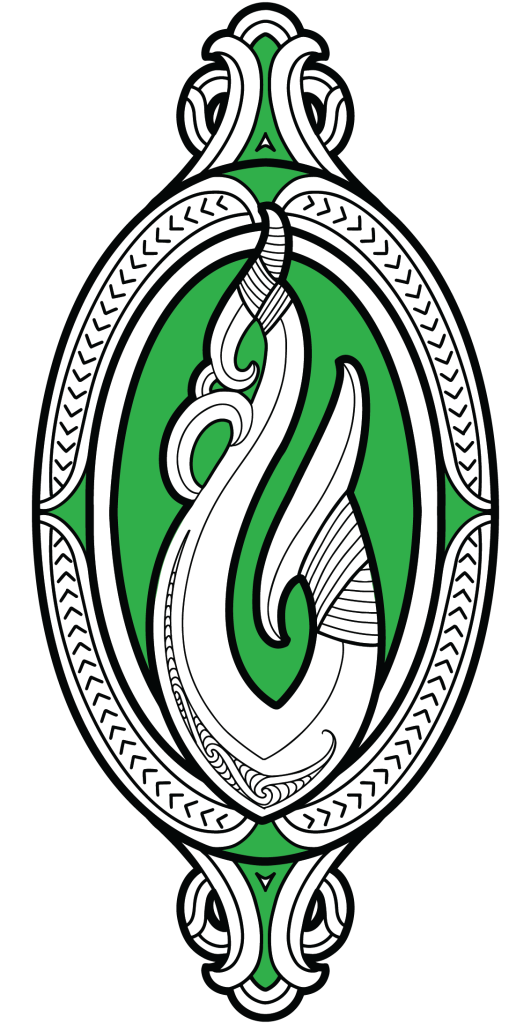
Whanau logo – Hei Matau
Representing the abundance that the awa provides, wai, manu, ika, tuna, huawhenua. “Matau”, short for Te matauranga o Maui Tikitiki” – for the individual and community to understand and master their environment.